
Where to Sell Used Industrial Machinery in India? A Practical Guide for First-Time Sellers
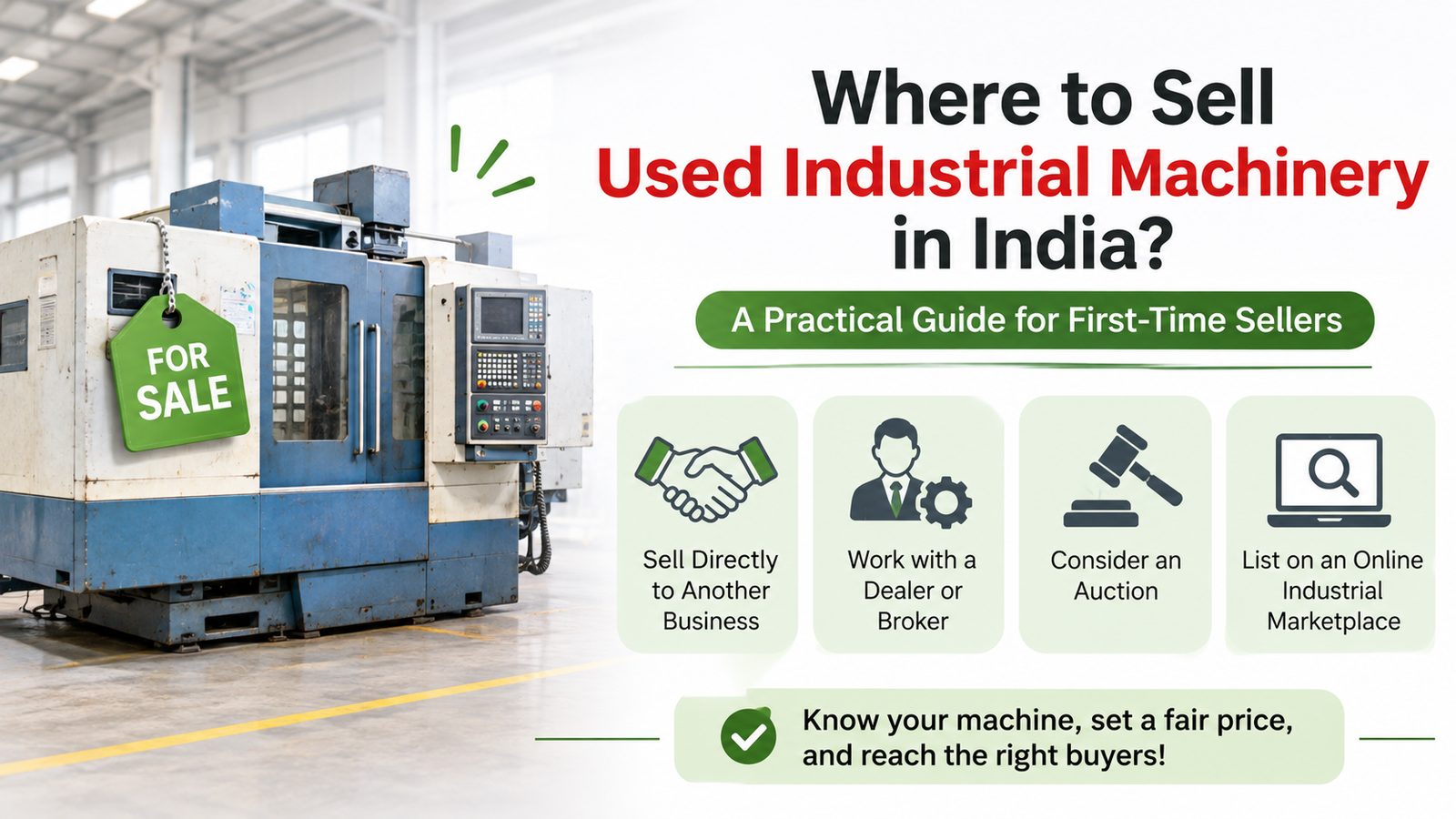
You have a machine sitting in your factory that you no longer need. Maybe you are upgrading to a newer CNC machine and you are thinking like Where to Sell Used Industrial Machinery in India?. Maybe production has stopped on one line. Maybe you have some extra equipment lying unused in your factory. Or perhaps you are simply clearing your old plant machinery.
Whatever the reason, you have made one decision:
You want to sell it.
And then comes the next question:
“Where do I sell this machine?”
If you have never sold industrial equipment before, this part can be confusing. You may know your machine very well, but you may not know where to find the right buyer.
You might ask someone in your industry, call a machinery dealer, contact a broker, consider an auction, or search online for something like “where to sell used machinery” or simply “purani machine kahan beche?”
There is no single answer for every seller.
The right option depends on what you are selling, how quickly you want to sell it, how much the machine is worth, and whether you already know your potential buyers or not.
So, let us look at the practical options.
Where to Sell Used Industrial Machinery in India?
There are many ways to sell used machinery in India. Each one has its own advantages and limitations.
1. Sell Directly to Another Business
The simplest option is often to find another company that needs your machine.
You may already know someone in your industry who is looking for the same type of equipment. For example, a manufacturer may need a used lathe, compressor, generator, CNC machine, packaging machine, or pump.
The advantage is that you can deal directly with the buyer.
There is no middleman, and you can discuss the machine, inspection, price and other terms directly.
The problem is reach. If nobody in your existing network needs the machine, you may not know Where to Sell Used Industrial Machinery in India? or how will you find the next buyer. You could spend weeks making calls and sending messages.
2. Sell Through a Dealer or Broker
Machinery dealers and brokers already have contacts with some industrial buyers.
This can be useful, especially when you are selling your expensive, specialized or older equipment and don't want to handle the overall selling process yourself.
However, understand the commercial side before you agree.
A dealer may want to buy the machine at a lower price and resell it. A broker may charge a commission after finding the right buyer for you.
That is not necessarily bad. You are paying for their network and experience.
The important thing is to be clear about the expected selling price, commission, payment and who will handle the machine after the sale.
3. Sell Through an Auction
An auction can make sense when you have different machines or you need to clear those equipment within a fixed time.
For example, a company closing a plant or shifting operations may have many machines to dispose of.
Auctions can bring multiple buyers into the process, but the final price is not always the highest possible price for every individual machine.
Before choosing an auction, understand the rules properly:
• Is there a reserve price?
• What fees or commission apply?
• When will you receive the payment?
• Who handles dismantling?
• Who handles transportation?
• How long does the buyer have to remove the machine?
These details can make a huge difference to the final outcome.
4. Sell Through an Online Industrial Marketplace
This is useful when your biggest problem is not the machine itself, but finding buyers for your machine.
An online industrial marketplace gives you a way to put your equipment in front of businesses that may be looking for machinery, equipment or industrial assets.
This can be particularly useful for a first-time seller who does not have a large buyer network.
Instead of asking only, “Who do I know who might buy this?”, you can make the machine available to a much wider group of potential buyers.
Which Selling Method Is Right for You?
Think about your situation first.
You already know a buyer:
A direct sale may be the easiest option.
You want someone to help you find a buyer:
A dealer or broker may make sense in this case.
You have many machines to dispose of:
An auction may be worth considering.
You have a machine but don't know who might buy it:
An online industrial marketplace can give you an access to a wider buyer pool.
There is no prize for choosing the most complicated route.
For a first-time seller, the simplest route that gives you access to the right buyers is usually the one worth considering first.
What Should You Decide Before Selling Your Machine?
Before you start looking for buyers, get a few basic things clear.
Decide Your Expected Price
You should have an idea of what you want for the machine.
That does not mean you need to fix one final price immediately. Industrial machinery prices can depend on age, brand, condition, capacity, configuration and current demand.
It is better to have three numbers in your mind:
• Your expected selling price
• A reasonable negotiation range
• The lowest price you are actually willing to accept
This makes negotiation much easier later.
Also remember that the buyer may have additional costs after purchase, such as dismantling, loading, transportation, installation and repairs.
Be Clear About the Machine's Condition
Is the machine currently running? Or facing some issues.
Is it being used every day?
Has it been sitting idle for two years?
Does it need repair?
Was it removed from production because of a technical problem?
These things matter.
A buyer will eventually want to know them, so there is little benefit in hiding them at the beginning.
If there is a known problem, say so.
An honest seller may get fewer enquiries, but the enquiries are more likely to be from people who actually understand what they are buying.
What Happens When a Buyer Contacts You?
This is where many first-time sellers are not prepared.
Someone sees your machine and says, “I am interested.”
Now what?
Usually, the buyer will want to understand a few things before discussing a final deal.
They may ask:
• Is the machine working?
• What is the model?
• What year is it?
• What is the capacity?
• How long have you owned it?
• Why are you selling it?
• Where is the machine located?
• Can I inspect it?
• Can you share a running video?
• What is your expected price?
You should be able to answer these without spending half a day searching for the product information. Keep the machine's basic documents, specifications, photographs and other useful information ready.
It saves time for both sides.
Let the Buyer Inspect the Machine
For many industrial machines, a physical inspection is an important part of the buying decision.
A buyer may want to visit your factory, check the machine while running, inspect its condition and understand how it can be removed and transported.
If inspection is possible, make that clear from the beginning.
For example:
“Machine is installed at our factory in Faridabad. Inspection can be arranged with prior notice.”
This is much more useful than simply saying, “Machine available.”
If the machine is currently running, showing it in operation can also help the buyer understand its actual condition.
Be Clear About Dismantling and Transportation
This point is often ignored until the deal is almost finished.
An industrial machine is not a parcel that someone can simply pick up from your space.
Depending on its size and location, the buyer may need cranes, riggers, trucks, special loading equipment and experienced technicians.
So discuss this early.
For example:
• Who will dismantle the machine?
• Who will load it?
• Who will arrange transportation?
• Who will pay these costs?
• When can the machine be collected?
If you make these things clear before finalizing the deal, there are fewer chances of confusion later or rejecting your product during the payment.
How Should You Handle Price Negotiation?
Expect some negotiation.
A buyer may provide less than your asking price. That does not automatically mean the buyer is wasting your time.
At the same time, you do not have to accept the first offer.
Instead of looking only at the number, understand the complete deal of the buyer .
For example, one buyer may offer ₹8 lakh and expect you to handle dismantling and loading.
Another may offer ₹7.5 lakh but handle dismantling, loading and transportation themselves.
The second deal may actually leave you with a similar or better net outcome.
So compare the complete transaction, not just the headline price.
How Do You Know If a Buyer Is Serious?
Not every enquiry will become a sale.
Some people will ask for the price and disappear. Some will ask for ten details and never visit. Others may genuinely be evaluating the machine.
That is normal.
A serious buyer will usually ask related questions about the equipment, condition, location, inspection and commercial terms.
You can also ask simple questions yourself:
“What application are you planning to use this machine for?”
“When are you looking to purchase?”
“Would you like to inspect the machine?”
These questions help you in understand whether the person is genuinely looking for equipment or simply checking prices.
Don't Hide Problems Just to Get a Higher Price
This deserves special attention.
Suppose your machine has a known issue with the spindle, electrical panel, hydraulic system or some other component.
Don't wait until the buyer discovers it during inspection.
Tell them.
Used machinery is different from new machinery. Buyers understand that a used machine may have some wear and may need some work.
The huge problem is discovering an undisclosed issue after spending time, money and effort on the deal.
Transparency makes the conversation much easier.
What If You Need to Sell the Machine Quickly?
Sometimes the goal is not to get the absolute maximum price.
You may need to vacate factory space. You may be shifting plants. You may need to clear old equipment before installing new machinery.
In such cases, speed has value.
You may choose a dealer, auction or online marketplace depending on your situation.
The important thing is to decide your priority first:
Do I want the fastest sale, the best possible price, or a balance between the two?
Once that is clear, choosing the selling route becomes easier.
Common Mistakes First-Time Machinery Sellers Make
A few mistakes come up again and again.
Waiting for the Perfect Buyer
There may not be one perfect buyer waiting for your exact machine. You need to make the machine visible to enough related buyers and then evaluate the enquiries you receive.
Giving Only the Asking Price
Price alone does not tell the buyer much. A ₹10 lakh machine in excellent working condition and a ₹10 lakh machine requiring major repairs are obviously not the same.
Being Unclear About the Location
Industrial machinery is heavy.
A buyer in Chennai and a seller in Ahmedabad need to think about transportation before making a deal.
Location is therefore a practical part of the sale.
Taking Too Long to Respond
Industrial buyers often compare multiple machines at the same time.
If someone asks a genuine question, respond when you can.
You don't need a fancy sales pitch. Clear information is enough.
Agreeing to a Deal Without Discussing Pickup
Don't leave dismantling, loading and transportation for the last minute.
Discuss them before finalizing the deal.
So, Where Should You Sell Your Used Machinery?
If you already have a buyer, a direct sale may be the easiest.
If you have a good dealer or broker contact, that may be convenient.
If you have several machines to dispose of, an auction can be useful.
But if your main problem is simply:
“I have a machine to sell, but I don’t know where to find buyers,”
then an online industrial marketplace is worth considering.
The important thing is to think beyond just “Where can I sell my machine?”
The better question is:
“Where can I reach the kind of buyer who may actually need this machine?”
Once you think about it that way, the process becomes much simpler.
You don't need to be an expert seller. You don't need a complicated sales strategy.
Start with the basics: know what you are selling, know its condition, have a reasonable price in mind, be clear about inspection and transportation, and communicate properly when a buyer shows interest.
That is a much better starting point than simply putting up a machine and waiting.
And yes, sometimes the whole thought process really is as simple as:
“Machine bechni hai. Buyer kahan milega?”
That is the problem you are actually trying to solve.