
How to Choose the Right CNC Machine
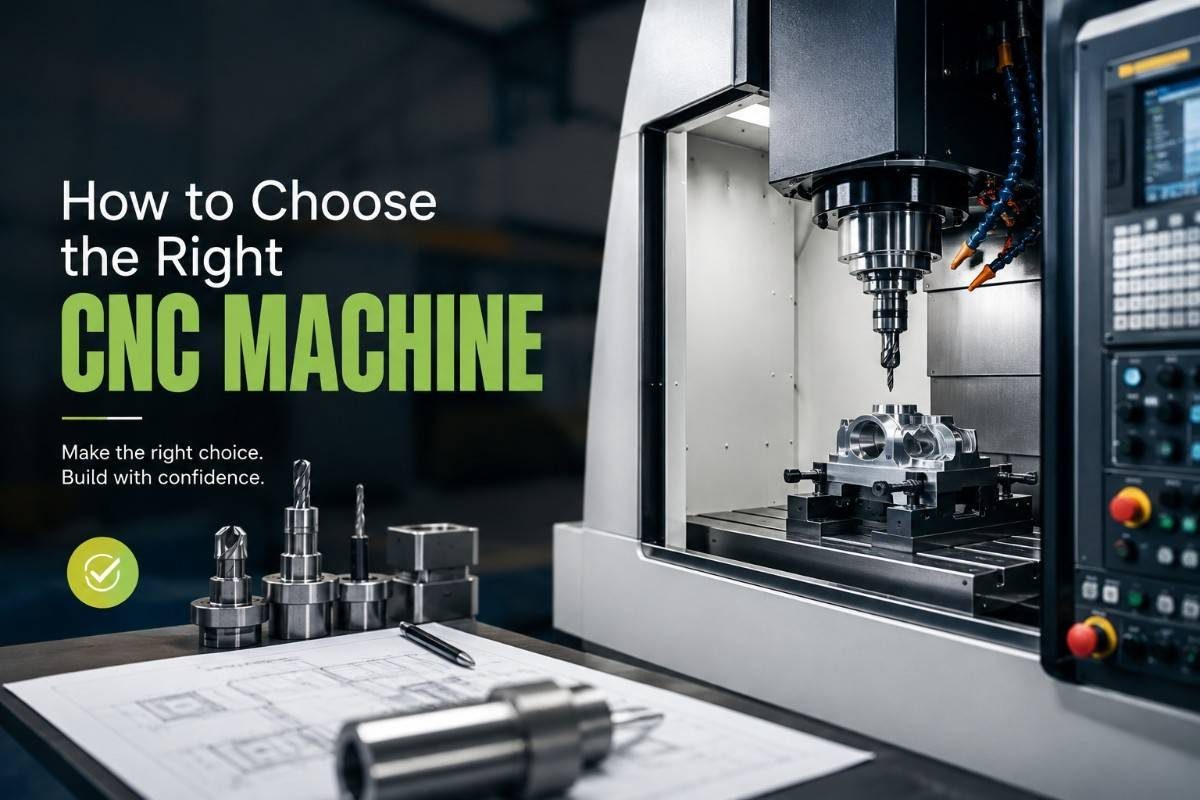
How to Choose the Right CNC Machine
Pick a CNC machine based on your material, part size, and tolerance needs first — then check the spindle power, axis travel, control system, and after-sales support. Buy industrial machinery only from a verified industrial equipment supplier, or you'll end up firefighting instead of manufacturing.
Buying a CNC machine isn't like buying a laptop. You can't just look at the spec sheet and call it a day. One wrong call — wrong spindle, wrong rigidity, wrong seller — and you're stuck with manufacturing machinery that either can't handle your job or dies on you in six months. So let's break this down properly, the way a friend who's been on a shop floor for twenty years would explain it to you.
Why Do Most CNC Machines Fail or Underperform?
Most CNC failures come down to four things — buying the wrong machine type for the job, ignoring spindle and rigidity specs, skipping maintenance, and purchasing from unverified sellers with no real support. Fix these four and you avoid 90% of headaches.
Here's the thing nobody tells you upfront: CNC machines rarely fail because of "bad luck." They fail because of predictable mistakes. Let's go through the big ones.
1. Mismatched Machine Type for the Job
A guy buying a 3-axis mill to cut complex aerospace-grade parts is setting himself up for disaster. Same goes for someone buying a heavy-duty CNC lathe when all they need is light-duty turning. Industrial machinery isn't one-size-fits-all. Your part geometry, tolerance, and batch size should decide the machine — not the other way around.
2. Underpowered Spindle and Weak Rigidity
This one's huge. A spindle that looks fine on paper but can't hold torque under load will chatter, vibrate, and chew through tooling. Weak machine bed rigidity means your tolerances drift the moment you push production speed. Cheap castings, thin frames — they look the same in photos, but they behave completely differently on the shop floor.
3. Skipped or Delayed Maintenance
Manufacturing machinery isn't "set and forget." Coolant systems clog. Ball screws wear. Way lubrication schedules get ignored because everyone's busy hitting targets. Then one day the machine just... stops being accurate. Preventive maintenance isn't optional — it's the whole game.
4. Buying from Unverified or Unaccountable Sellers
This is the sneaky one. You buy industrial equipment from a supplier you found through a random forward or a cold call, no verification, no paper trail. Machine shows up with hidden wear, no warranty support, and the "seller" has gone dark. This single mistake causes more losses than actual mechanical failure. This is exactly why platforms built for industrial buying — like IndusFact — gate contact details until a genuine inquiry goes through, and flag sellers with a GST-verified badge. You're not just buying a machine, you're buying accountability.
What Type of CNC Machine Actually Fits Your Job?
Match the machine to your process — mills for milling/drilling operations, lathes for turning cylindrical parts, routers for softer materials like wood or plastic, and multi-axis machining centers for complex geometry. Don't buy capability you'll never use.
Look, there's no "best" CNC machine. There's only the best one for what you're actually making.
CNC Milling Machines — great for flat surfaces, slots, pockets, drilling. If you're making brackets, housings, or plates, this is your workhorse.
CNC Lathes/Turning Centers — built for cylindrical parts: shafts, bushings, fittings. If your product spins on an axis, this is the category to shop.
CNC Routers — lighter duty, best for wood, plastics, composites, softer non-ferrous metals. Cheaper, faster, but not built for heavy steel work.
Multi-Axis Machining Centers (4/5-axis) — for complex geometry in a single setup. More expensive, but saves massive time on intricate parts.
CNC Plasma/Laser Cutters — for sheet metal cutting, not machining per se, but often grouped under the same industrial machinery umbrella.
The rule of thumb: buy for the part you're making today, with maybe 20% headroom for growth. Don't over-buy "just in case." That capital is better spent elsewhere.
What Specs Actually Matter (And Which Ones Are Just Marketing)
Focus on spindle power (HP/kW), axis travel, positioning accuracy, table load capacity, and control system compatibility. Ignore vague marketing terms like "industrial-grade" unless backed by actual numbers.
Anyway, let's talk specs, because sellers love throwing around words that sound impressive but mean nothing.
Spindle Power and Speed (RPM): This decides what materials you can cut and how fast. Aluminum needs different spindle behavior than hardened steel. Check both HP/kW rating and the RPM range — not just one number.
Axis Travel (X/Y/Z): This is your actual working envelope. A machine can have great specs everywhere else, but if the travel doesn't fit your biggest part, it's useless to you.
Positioning Accuracy and Repeatability: Accuracy tells you how close to the target the machine gets. Repeatability tells you if it can do that same thing 1,000 times in a row without drifting. For precision manufacturing, repeatability matters more than raw accuracy numbers.
Control System: Fanuc, Siemens, Mitsubishi, Haas — whatever you pick, make sure your operators are already trained on it, or budget for training. Switching control systems mid-operation is a productivity killer.
Table Load and Bed Construction: Cast iron beds handle vibration dampening way better than fabricated steel. If you're running heavy stock or high-speed cuts, this matters more than people think.
Automatic Tool Changer (ATC) Capacity: More tool slots mean fewer manual changeovers, which means faster cycle times. Worth the extra cost if you're running varied part programs.
How Do You Check Machine Quality Before You Buy (Especially Online)?
Before buying industrial equipment on any B2B platform, verify the seller's GST status, check maintenance history, ask for spindle hour logs, and insist on a video walkaround or third-party inspection before payment.
This is where most buyers get burned, so pay attention here.
Check this out — here's your pre-purchase checklist:
Verify the Seller's Business Legitimacy. GST registration isn't a formality — it tells you the seller is a real, traceable business entity. On IndusFact, listings carry a GST-verified badge specifically so buyers don't have to take this on faith.
Ask for Spindle Hours and Maintenance Logs. A used CNC machine with 500 spindle hours and full service records is a completely different purchase than one with 15,000 hours and "we're not sure, honestly."
Request a Video Walkaround, Not Just Photos. Photos hide vibration, noise, and wear. A live video call showing the machine running tells you way more in five minutes than a photo gallery ever will.
Confirm What's Included. Tooling, fixtures, software licenses, control pendant — machines get listed without half of what you actually need to run them. Get this in writing.
Never Send Payment Before Verified Contact. This is the exact trap unverified marketplaces walk you into — pushy sellers, fake urgency, "pay now or lose the deal." A properly built industrial equipment supplier platform keeps buyer contact gated until a genuine inquiry is raised, which naturally filters out spam and scam listings before you even get on a call.
Compare at Least 3 Listings. Prices for the same class of manufacturing machinery can swing 20-30% based on condition, brand, and seller location. Don't anchor to the first listing you see.
The bottom line is, buying used or new industrial machinery online works great — as long as the platform actually does the verification work for you instead of just being a glorified listings board.
Should You Buy New, Used, or Rented CNC Machines?
Buy new if you need warranty-backed reliability for high-volume production. Buy used for proven cost savings on standard jobs. Rent when you have a short-term contract or want to test a machine class before committing capital.
New machines come with full warranty, latest control software, and zero mystery wear. But you're paying a premium, and depreciation hits fast in year one.
Used machines can save you 30-50% if — and only if — you've done the quality checks above. A well-maintained five-year-old CNC lathe can easily outperform a neglected two-year-old one.
Renting industrial machinery makes sense when you've got a project-based contract, seasonal demand, or you want to trial a machine type before a big capital decision. It's underused in India, honestly, but it's a smart move for procurement teams managing tight budgets.
Whichever route you pick, the underlying risk is the same: you need a supplier you can actually trust and follow up with. This is exactly the gap a platform like IndusFact is built to close — every listing is human-moderated before it goes live, so you're not wading through duplicate spam or fake "brand new" tags on ten-year-old machines.
FAQ: Quick Answers to Common CNC Buying Questions
Q1. What's the biggest mistake buyers make when choosing a CNC machine?
Buying based on price alone instead of matching the machine to their actual part specs, tolerance requirements, and production volume. Cheap upfront often means expensive downtime later.
Q2. How do I know if a CNC machine seller is trustworthy on a B2B marketplace?
Look for GST verification, moderated listings, and a platform that gates buyer-seller contact until a real inquiry is sent — like IndusFact does. That structure filters out most scam sellers before you even talk to them.
Q3. Is a used CNC machine a good investment for a small manufacturing unit?
Yes, if you verify spindle hours, maintenance records, and get a live video walkaround first. Used industrial equipment can cut your capital cost by 30-50% without sacrificing much performance.
Q4. What's more important — spindle power or positioning accuracy?
It depends on your job. Spindle power decides what materials and cutting speeds you can handle. Positioning accuracy and repeatability decide how consistent your finished parts are. High-precision work needs both dialed in.
Conclusion
Choosing the right CNC machine isn't about chasing the biggest spec sheet — it's about matching machine type, spindle capability, and rigidity to your actual production needs, then buying from a supplier you can verify and hold accountable. Skip any one of these steps, and you're rolling dice with your production line.
If you're in the market right now, browse verified CNC machinery listings on IndusFact — GST-verified sellers, human-moderated listings, and gated contact details, so you're inquiring with real businesses, not guessing.
Related articles
Industrial Classified Site Guide: How IndusFact Works for B2B Sellers & Buyers
India’s B2B industrial classified site for used machinery, equipment, and rentals. 100% human-verified, GST badge ready, and 0% consumer clutter.
Rental vs Purchase: When does renting industrial equipment make sense?
Short-term projects, seasonal demand, and specialized jobs often justify renting. A quick framework to decide.