
Why IndusFact hides seller identity on public pages
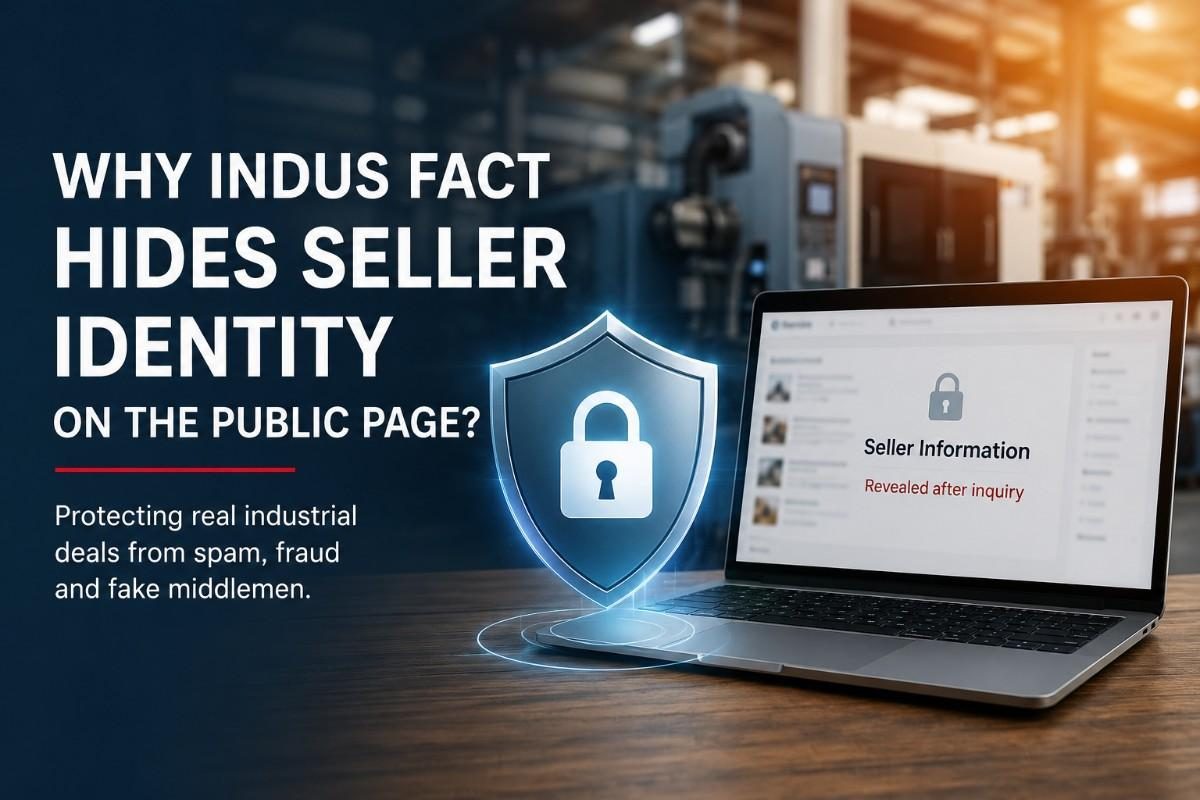
Why Does IndusFact Hide Seller Identity on the Public Page?
IndusFact hides full seller identity and contact details on public listings to stop spam, scraping, and shady middlemen from hijacking genuine deals. You only get seller info after you send a real inquiry — this keeps GST-verified industrial equipment suppliers safe from fraud and keeps buyers talking to actual factories, not random forwarders.
Let's get straight into it. If you've ever browsed a B2B marketplace and wondered why you can't just see the seller's phone number on the listing page — this is why. It's not a bug. It's not IndusFact being difficult. It's a deliberate trust mechanism, and honestly, it's one of the smartest things a classifieds platform for industrial machinery suppliers near me can do.
Think about it like this: would you post your home address and phone number on a billboard? No. You'd want to know who's actually interested first. That's exactly the logic here.
What's the Actual Problem With Open Contact Details on B2B Sites?
Direct answer: Open contact info on public listings invites scrapers, spam callers, and fake buyers who never intend to purchase. This wastes seller time, floods inboxes with junk leads, and lets competitors poach verified industrial materials suppliers without doing any real business.
Here's the thing nobody tells you about old-school classifieds. The moment a phone number goes public, it gets scraped. Bots crawl the page, grab the number, and dump it into spam databases within days. Sellers — real ones, running actual factories — start getting calls from random resellers, data brokers, and sometimes even scammers pretending to be buyers just to extract pricing info for competitors.
For genuine industrial equipment suppliers, this is a nightmare. They're trying to sell a lathe machine or a batch of raw materials, and instead they're fielding twenty spam calls a day. Eventually they either abandon the platform or stop answering calls altogether — which hurts real buyers too. Everyone loses.
Gating the contact info until a real inquiry is sent flips this. Only people who are genuinely interested — who took the two minutes to fill in an inquiry — get through. Anyway, that filter alone kills like 80% of the noise.
Why Does Fraud Happen So Easily in Industrial B2B Deals?
Direct answer: Fraud thrives when buyers can't verify who they're actually dealing with. Fake sellers copy real listings, undercut prices, and vanish after taking advance payment — a huge risk when you're sourcing from industrial machinery suppliers near me you've never met.
This is the part that should worry every procurement manager reading this. Industrial deals aren't small. We're talking machinery worth lakhs, sometimes crores. And in an open marketplace with no gating, here's what typically goes wrong:
Listing duplication: Someone copies a genuine seller's photos and description, posts it as their own at a lower price, and collects advance payments from buyers who never receive anything.
Impersonation: A middleman poses as the original factory owner, negotiates a deal, and disappears with the token amount.
Data harvesting: Competitors scrape contact details just to build a database of suppliers — not to actually buy.
Unverified claims: Anyone can say "GST registered" in a description. Without actual verification, that's just text on a page.
Check this out — none of this needs sophisticated hacking. It just needs an open phone number and a convincing photo. That's the whole scam. So when a platform hides identity behind a verification and inquiry layer, it's closing the exact door fraudsters walk through.
Why Does IndusFact Hide Seller Identity Behind an Inquiry Wall?
IndusFact gates seller identity because trust has to be earned through a real transaction step, not handed out for free on a public page. It forces every contact to go through a tracked inquiry, so both sides know the conversation is genuine.
IndusFact isn't just another classifieds board. It's built specifically for industrial equipment suppliers, machinery dealers, and raw material vendors — people doing serious B2B transactions, not casual garage-sale stuff. So the platform treats identity like it should be treated in a business context: as something you reveal when there's real intent on both sides.
Here's how it actually works in practice:
Listings go live only after human moderation. No bot approves a post automatically. A real person checks it.
Sellers can carry a GST-verified badge, which means their business registration has actually been checked — not just typed into a form.
Buyer contact stays gated until a genuine inquiry is sent through the platform.
Seller identity stays gated similarly, so it's a two-way filter, not just a one-way protection.
This two-way gating is honestly the smartest part. Most marketplaces only protect one side. IndusFact protects both the buyer and the seller from wasting time on people who aren't serious. The bottom line is, when you finally do connect, you're talking to someone who's been through moderation and who wants to talk to you specifically — not broadcasting to the entire internet.
What Are the 3-4 Biggest Reasons B2B Industrial Deals Fail?
Most industrial B2B deals fail because of fake listings, unverified sellers, spam-driven fatigue, and mismatched specs discovered too late. Fixing this starts with sourcing only from verified industrial materials suppliers on platforms that actually check credentials.
Let's break these down one at a time, because each one is a real, recurring headache for buyers and plant managers.
1. Fake or duplicate listings. As mentioned, copied listings with undercut pricing are everywhere on open platforms. Buyers get excited about a "deal," pay an advance, and then radio silence.
2. Unverified seller credentials. Anyone can claim to be a registered business. Without a GST-verification layer, you're taking their word for it — which isn't good enough when you're procuring machinery worth serious money.
3. Spam fatigue killing communication. When contact details are public, both sides get flooded. Sellers stop responding fast because they're overwhelmed. Buyers get ignored because their message is buried under a hundred spam leads.
4. Specs and condition mismatches. This one isn't about identity hiding exactly, but it's related — when there's no accountability trail (like an inquiry log), disputes over "you said it was in working condition" become he-said-she-said with zero record.
All four of these get significantly reduced when a platform moderates listings, verifies GST status, and gates contact until inquiry. That's the whole design philosophy behind how IndusFact operates.
How Should Buyers Evaluate Quality Before Purchasing on a B2B Marketplace?
Before buying, check for a GST-verified badge, read the listing for moderation signs, always route contact through the platform's inquiry system, and ask for documentation upfront — never pay before confirming seller legitimacy through verified channels.
Okay, so you're a plant manager or procurement lead sourcing from industrial equipment suppliers. Here's your actual checklist, no fluff:
Look for the GST-verified badge. This is a signal, not a guarantee, but it's a real signal — it means the platform did the legwork to confirm business registration.
Send the inquiry through the platform, not around it. If a "seller" tries to move you to WhatsApp before you've even exchanged basic details, that's a yellow flag. Legit industrial materials suppliers are usually fine using the platform's own contact flow first.
Ask for documentation before any payment. Invoices, GST certificate, equipment photos with timestamps, maybe even a video call. A real factory owner will not hesitate.
Check listing consistency. Does the description match typical pricing for that machinery category? Wildly underpriced listings are a classic bait tactic.
Confirm location and reachability. If you're searching "industrial machinery suppliers near me," actually verify the address matches what's on the listing — don't just trust a pin on a map.
Never wire advance payment to an unverified account. This should be obvious, but it's still the number one way people lose money in B2B deals.
Honestly, most of this checklist becomes way less necessary when you're sourcing through a platform that already does human moderation and GST verification on the backend. That's kind of the point of using a proper B2B marketplace instead of random classifieds groups on social media.
So Does Hiding Identity Actually Help Buyers Too, Not Just Sellers?
Yes — gating identity protects buyers just as much as sellers. It stops fake sellers from mass-targeting buyers, keeps the inquiry trail documented for disputes, and ensures every conversation on the platform starts with real intent, not spam.
People assume this feature is purely a seller-protection thing. It's not. Buyers benefit hugely too. When you send an inquiry on IndusFact, you get a documented trail — a record that you contacted this specific seller about this specific listing. If something goes wrong later, that trail matters. It's evidence.
Also, because sellers aren't drowning in spam, the ones who are active on the platform tend to respond faster and more seriously to real inquiries. You're not competing with a hundred junk messages for attention. Check this out — that alone speeds up sourcing timelines for procurement teams who are working against tight deadlines.
Conclusion
Hiding seller identity on the public page isn't about secrecy for its own sake. It's a trust-building mechanism that keeps spam out, keeps fraud down, and makes sure every conversation between buyer and seller actually means something. For anyone sourcing from industrial equipment suppliers, verifying credentials before you even pick up the phone changes the entire risk profile of the deal.
If you're hunting for industrial machinery suppliers near me or trying to lock down reliable industrial materials suppliers for your plant, this kind of gated, GST-verified, human-moderated system is exactly what should be standard — not the exception.
Browse IndusFact's verified machinery and materials categories to see how gated inquiries and GST-verified badges actually work in practice before your next purchase.
FAQs
Q1: Why can't I see the seller's phone number directly on an IndusFact listing? A: IndusFact gates contact details until you send a genuine inquiry. This stops spam bots and scrapers from harvesting numbers, and keeps sellers responsive to real buyers instead of junk leads.
Q2: Does a GST-verified badge guarantee the seller is 100% legitimate? A: It's a strong trust signal since the platform checks the business registration, but you should still confirm documentation and payment terms directly before finalizing any deal.
Q3: How do I contact a seller once I've sent an inquiry on IndusFact? A: Once your inquiry is accepted, the platform reveals contact details so you can continue the conversation directly — phone, email, or however the seller prefers.
Q4: Is this identity-gating system common among industrial equipment suppliers platforms? A: It's becoming standard practice on serious B2B marketplaces because it directly reduces fraud and spam, though many general classifieds sites still skip it — which is part of why fake listings are so common there.